Category: Blog

Your blog category

  • FEMA and RBI Rules for Indian Businesses Expanding Globally: Key Compliance Guide

    FEMA and RBI Rules for Indian Businesses Expanding Globally: Key Compliance Guide

    📈 FEMA & RBI Rules for Indian Businesses Expanding Globally: Key Compliance Guide

    Currency exchange regulations form the backbone of any international business operation for Indian entities, requiring careful navigation through frameworks established by the Foreign Exchange Management Act (FEMA) and the Reserve Bank of India (RBI). 

    Understanding these rules is essential for legal compliance and business success.

     Overview of FEMA and RBI Guidelines

    The Foreign Exchange Management Act (FEMA), 1999, regulates all foreign exchange transactions in India, aiming to facilitate external trade, promote the orderly development of the forex market, and maintain transparency for Indian businesses handling foreign currencies. The Reserve Bank of India (RBI), as the apex regulatory authority, issues guidelines and notifications—such as Master Directions—for cross-border payments, investments, and remittance procedures.

    Permissible Foreign Remittances

    Foreign remittances are classified into capital account transactions (ODI—Overseas Direct Investment, acquisition of assets, etc.) and current account transactions (imports, royalties, travel expenses, etc.). While investments abroad or acquisitions require adherence to RBI-prescribed limits under ODI guidelines, current account remittances often involve documentation and, in some cases, prior RBI approval. The RBI’s Liberalized Remittance Scheme (LRS) caps outward remittances for individuals, and certain activities—like speculative forex trading—are prohibited.

    Permissible Limits for Businesses and Individuals

    -Liberalized Remittance Scheme (LRS): Individuals can remit up to USD 250,000 annually for allowed transactions (education, travel, investments), with reporting and documentation duties for each transfer.

    Corporate Remittances: Businesses have varied limits based on trade and investment types. The automatic route allows ODI within RBI thresholds without approval, but exceeding them or involving sensitive jurisdictions requires RBI permission. The RBI’s recent reforms promote more streamlined approval for ODI, increasing autonomy for corporates and faster processing.

    Reporting Obligations

    Businesses must file Form 15CA/CB, certified by a Chartered Accountant, to verify tax compliance on foreign remittances. Remittances must be reflected in annual financial statements and, in ODI cases, in Annual Performance Reports (APR). Individuals need to declare remittances and foreign assets in their income tax returns (Schedule FA). Authorized Dealer (AD) banks serve as compliance intermediaries, checking documentation and justification for each transaction.

    Special Considerations

    Anti-Money Laundering (AML): Adherence to global AML standards and KYC documentation is mandatory.

    High-Risk Jurisdictions: Payments to tax havens/non-cooperative jurisdictions are subject to extra scrutiny and disclosure—businesses must show end-use of funds and ensure transparency.

    Service Exports and Imports: The new FEMA 2025 draft explicitly includes digital services and software exports, offering clarity and ease for startups and IT firms.

    Practical Strategies for Compliance

    Pre-Transaction Planning: Businesses should consult financial and legal experts to select the right remittance channels and gather all required documentation for smoother transactions.

    Automation: Utilizing ERP and digital tools can simplify tracking and reporting of forex transactions, ensure timely regulatory filings, and help avoid penalties.

    Bank Partnerships: Strong collaboration with AD banks helps expedite approvals and compliance processes, especially under the decentralized provisions of FEMA 2025.

    Case Studies

    Reliance Industries: Reliance used FEMA-compliant remittance mechanisms for establishing overseas entities in energy, demonstrating practical use of ODI guidelines.

    Infosys: Infosys exemplifies meticulous adherence to RBI and FEMA rules when remitting funds for international expansion, reflecting the importance of robust compliance.

    Conclusion

    RBI’s evolving currency exchange regulations demand a proactive approach from Indian businesses engaged in international trade and investment. By leveraging permissible remittance routes, adhering to limits, and fulfilling comprehensive reporting requirements, businesses can navigate regulatory risks and confidently pursue global growth. This module delivers actionable guidance to enable compliance and foster opportunities in the global market.

    FOR BLOG- The author of this article is Mr. Prashant Ajmera, an Indian immigration lawyer and Canadian citizen. He is the founder of Ajmera Law Group and the author of two books, “Millionaires On The Book” and “How to Plan for Your Child’s Foreign Education.” Over the past 30 years, he has assisted and advised over 30,000 students and families on planning their foreign education and settlement. He regularly speaks at various forums on this subject.

    Ajmera Law Group: Mo: +91 9974253030 | info@ajmeralaw.com | www.ajmeralaw.com

    https://ajmeralaw.com/

  • Myths vs. Reality: About Studying Abroad for Indian Students

    Myths vs. Reality: About Studying Abroad for Indian Students

    Myths vs. Reality: Clearing Common Misconceptions About Studying Abroad for Indian Students 4/10

    Studying abroad is an exciting dream for many Indian students, full of promise for global career opportunities and personal growth. However, this journey is often obscured by a series of myths and misconceptions. As an Indian immigration lawyer and international career counselor with over 30 years of experience, I have guided countless students and their families to distinguish between myth and reality. Below, I clear up the most common myths about studying abroad and share the facts every student should know.

    Myth 1: Studying Abroad Automatically Guarantees a Job and Immigration

    Many believe that obtaining a foreign degree will automatically lead to a high-paying job and permanent residency abroad. The reality is very different; immigration and work permit policies vary across countries and are subject to regular changes. Success depends on individual skills, experience, and job market demand.

    Myth 2: Scholarships and Partial Scholarships are Always Merit-Based

    Some think all scholarships are purely merit-based awards. In fact, many scholarships, especially those offered by institutions or agents, serve primarily as marketing tools to attract students rather than reflecting strict academic merit. Prospective students should verify scholarship authenticity and conditions carefully.

    Myth 3: Education Agents Have Your Best Interests at Heart

    It’s a common misconception that education agents prioritize students’ career goals. However, most agents earn commissions from colleges per student enrolled, which may conflict with your best interests. It’s essential to conduct independent research and seek advice from qualified immigration and career professionals.

    Myth 4: Studying Abroad is the Only Way to Settle Abroad

    While education is one pathway for immigration, it is not the only one. Skilled immigration and family-sponsored routes also exist, and students should consider all legal options rather than assuming overseas education guarantees settlement.

    Myth 5: Only Students with 90% and Above Marks Can Study Abroad

    While high grades help, many universities accept students with 60-70% marks if their applications include strong test scores, personal statements, and extracurricular achievements.

    Myth 6: English Proficiency Exams like IELTS are Mandatory Everywhere

    IELTS is widely accepted but not the only accepted exam. Many universities accept TOEFL, Duolingo, or medium of instruction certificates. Confirm specific requirements per institution.

    Myth 7: Students with Backlogs Cannot Study Abroad

    Some universities are flexible with backlogs, especially when presented with improvements or valid reasons. Students should research institution-specific policies and be transparent in applications.

    Myth 8: Life Abroad is Glamorous and Stress-Free

    Reality involves challenges such as culture shock, financial management, academic pressure, and homesickness. Successful adjustment requires resilience and adaptability, beyond just academic achievement.

    Myth 9: You Can Start Planning for Study Abroad After Grade 12

    For those targeting prestigious universities, starting as early as Grade 7 to 9 is crucial to build a competitive academic and extracurricular portfolio. Late planning limits opportunities.

    Myth 10: Fluency in English Guarantees Overseas Success

    Beyond language fluency, understanding cultural nuances, communication styles, and adapting learning methods are key to thriving abroad.

    Final Thoughts:
    Studying abroad offers transformative opportunities, but it requires clear understanding, realistic expectations, and diligent preparation. Avoid myths that may mislead you, and seek expert guidance to craft a successful international education journey.

    This blog was written by Prashant Ajmera, an Indian immigration lawyer and international career counselor with over 30 years of experience helping Indian students realize their study abroad dreams.

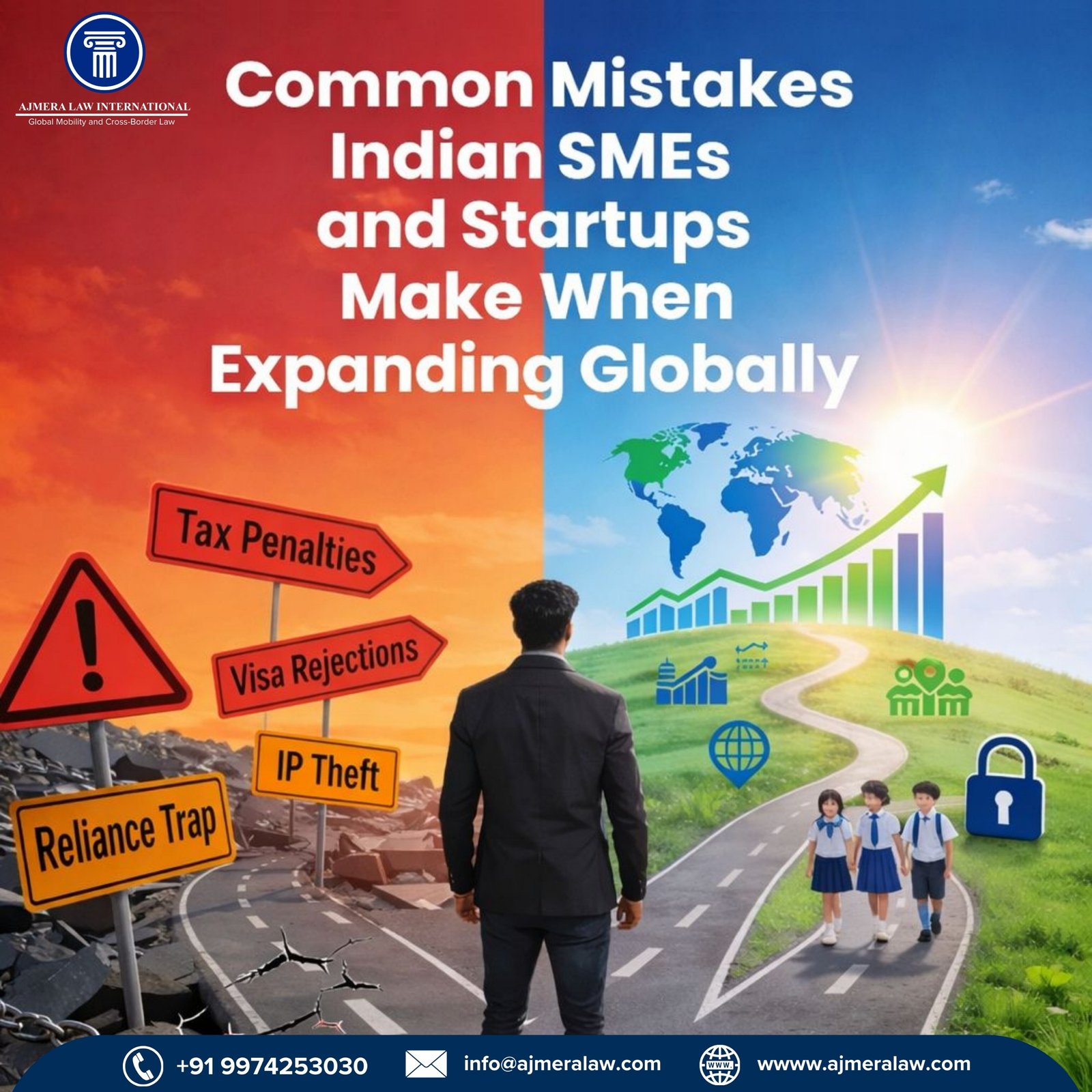
  • Common Mistakes Indian SMEs and Startups Make When Expanding Globally

    Common Mistakes Indian SMEs and Startups Make When Expanding Globally

    Common Mistakes Indian SMEs and Startups Make When Expanding Globally

    Indian small and medium enterprises (SMEs) and startups often dream big about going global. They pursue international expansion for compelling reasons: scaling business operations worldwide, enhancing their global brand image, or relocating for superior children’s education and quality of life. However, many stumble due to poor preparation and misguided advice.

    Why They Go Global

    Entrepreneurs eye three primary drivers:

    • Global Business Expansion: Accessing larger markets, diverse customers, and revenue streams beyond India.
    • Building a Global Image: Boosting credibility to attract investors, partners, and talent.
    • Business and Family Relocation: Seeking better schools, healthcare, and lifestyle for the next generation.

    These ambitions are valid, yet execution falters without expert guidance.

    The Reliance Trap: Wrong Advisors

    Few Indian professionals are equipped for cross-border complexities like international visas, tax treaties, or entity setups. Instead, founders turn to:

    • Unqualified agents promising quick fixes.
    • Online searches yielding out dated information
    • Family and friends abroad offering anecdotal tips.

    This shortcut leads to costly pitfalls, undermining long-term goals.

    Key Mistakes and Consequences

    1. Incorrect Legal Structure: Choosing wrong entities (e.g., branch vs. subsidiary) triggers tax penalties, compliance failures, or ownership issues.
    2. Limiting Legal Options: Rushing into one visa path (e.g., investor visas) closes doors to talent-based routes like startup or skilled worker programs.
    3. Prioritizing Cost Over Value: Opting for cheapest agents ignores tailored strategies, resulting in visa rejections or suboptimal business models.
    4. Ignoring Tax and Compliance Risks: Overlooking double taxation, transfer pricing, or local regulations leads to audits and fines.
    5. Underestimating Cultural and Market Fit: Failing to adapt products/services culturally or validate demand wastes resources.
    6. Neglecting IP Protection: Launching without securing trademarks/patents abroad invites copycats.
    7. Poor Succession Planning: Family relocations disrupt operations back home without handover plans.

    These errors often mean the main objective—sustainable growth—remains unachieved.

    How to Avoid These Pitfalls

    Consult specialists in international law, such as those versed in different jurisdictions, Conduct due diligence on advisors via credentials and success stories. Start with pilot markets and hybrid structures to test waters. Prioritize long-term viability over short-term savings.

    Global success demands strategy, not speed. Indian SMEs and startups can thrive internationally by learning from these mistakes.

    Expert Assistance for Global Success

    Ajmera Law International assists with options and objectives for 35 countries in association with respective law firms and professionals. Call our office at 9974253030 or email: info@ajmeralaw.com.